
6 Types of Retaining Walls Every Homeowner Should Know
- pkgbp02
- Feb 25
- 15 min read

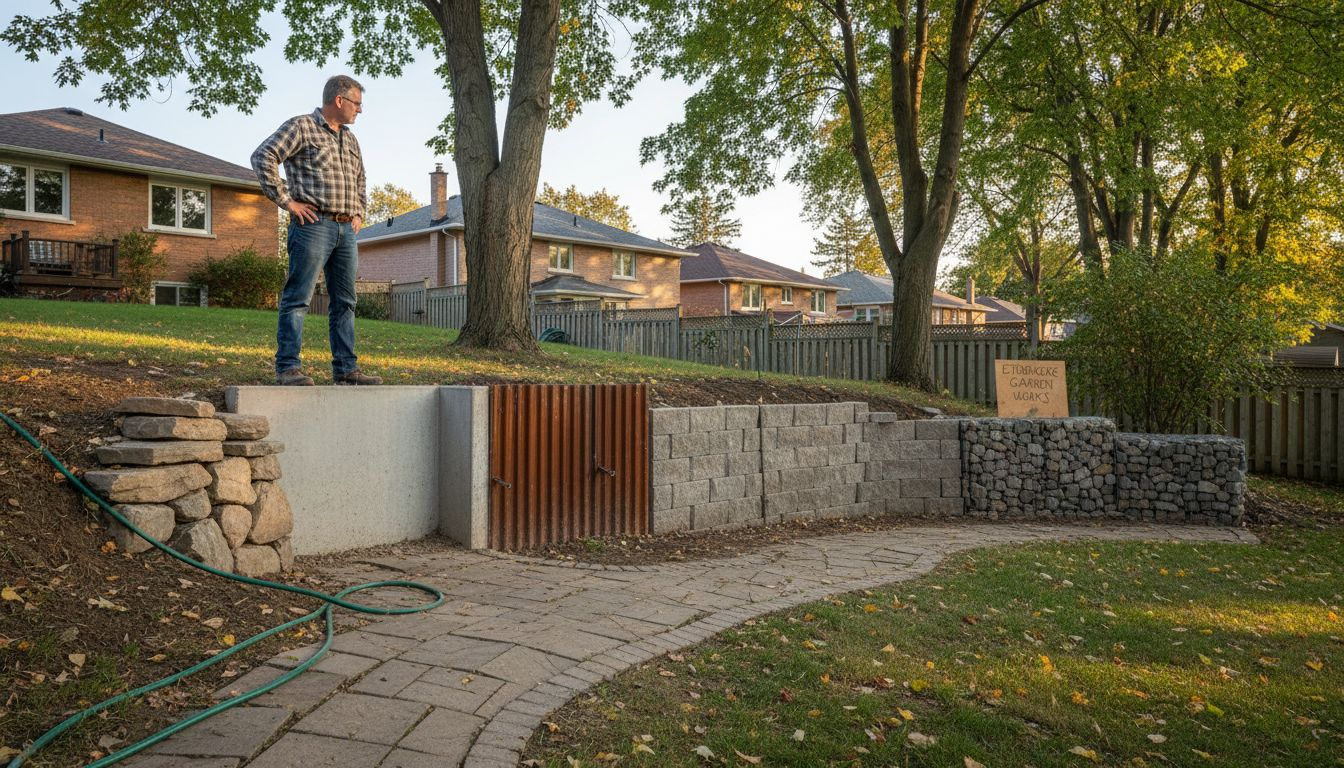
Choosing the right retaining wall can be overwhelming when your Etobicoke property faces unique challenges like uneven ground, limited yard space, or tricky drainage conditions. Each wall type delivers a distinct balance of strength, longevity, and design flexibility. If you want your landscaping to last and look great, understanding these options is vital before you start building.
This list reveals the practical strengths and weaknesses of the most reliable retaining wall solutions used across Canadian properties and globally. You’ll see how each design, from gravity walls to segmental systems, manages soil pressure and adapts to your needs, backed by proven engineering standards.
Get ready to discover actionable insights that help you choose the best wall for your yard, prevent costly mistakes, and make your outdoor space both stable and beautiful.
Table of Contents
Quick Summary
Takeaway | Explanation |
1. Gravity walls are cost-effective solutions. | Their simplicity and reliance on mass provide reliable support without complex engineering or high costs. |
2. Cantilevered walls save property space. | They require less surface area while efficiently supporting significant heights, ideal for tight urban settings. |
3. Sheet pile walls are perfect for narrow lots. | Their vertical design minimizes footprint, allowing for substantial soil retention in constrained areas. |
4. Anchored walls handle extreme conditions. | They are ideal for high retention needs, utilizing anchors for additional support in challenging soil situations. |
5. Segmental walls offer design flexibility. | These interlocking systems adapt to various heights and shapes, providing durability and aesthetic appeal for homeowners. |
1. Gravity Retaining Walls: Simple Strength for All Yards
Gravity retaining walls are the most straightforward type of wall you can install in your Etobicoke yard. They work by using sheer weight and mass to resist the pressure from soil and water behind them, making them reliable and cost-effective for most residential properties.
Unlike more complex wall systems, gravity walls rely on a simple principle: the heavier the wall, the more force it can withstand. Their mass becomes their strength. This is why gravity walls typically have a wider base and taper slightly as they rise, distributing weight efficiently to resist lateral earth pressure.
How Gravity Walls Work
These walls function through a straightforward mechanism. The weight of the wall structure itself pushes down on the foundation, creating friction that resists soil pressure trying to push the wall outward. Think of it like a heavy book leaning against a bookend—the weight keeps everything in place.
Gravity retaining walls are particularly effective for yards with moderate slopes. They handle water drainage naturally when properly built, and they don’t require complex reinforcement systems like modern alternatives.
Key Benefits for Homeowners
Simple construction makes installation faster and less disruptive to your property
Lower maintenance costs since there are no internal reinforcements to worry about
Versatile materials can be built from stone, concrete blocks, or poured concrete
Excellent longevity when properly constructed with good drainage
Aesthetic appeal works well with traditional and modern landscape designs
Gravity walls succeed because their mass transforms soil pressure into stability—no complex engineering required.
According to comprehensive design guidelines, gravity walls derive their strength primarily from their mass to resist lateral earth pressure, making them suitable for various yard applications. This design approach has proven effective across residential landscapes for decades.
Ideal Applications in Etobicoke Properties
Gravity walls work best for retaining heights between 3 and 8 feet, which covers most residential yard needs. They’re excellent for terracing sloped properties, creating raised garden beds, or establishing level areas on uneven terrain.
In Etobicoke’s varied topography, gravity walls handle seasonal freeze-thaw cycles well when built with proper drainage and frost-protected footings. The simplicity of their design means fewer components can fail during harsh weather.
What Makes Them Right for You
If you want straightforward, reliable, and attractive wall solutions without breaking your budget, gravity walls deserve consideration. They deliver practical strength without unnecessary complexity, and they blend seamlessly with retaining wall fundamentals that enhance your outdoor space.
The beauty of gravity walls lies in their honesty—they simply do the job through solid engineering principles that have stood the test of time.
Pro tip: Ensure your gravity wall has adequate drainage behind it by installing a perforated drain pipe and gravel base, as poor drainage is the leading cause of wall failure in Ontario’s climate.
2. Cantilevered Retaining Walls: Maximizing Stability and Space
Cantilevered retaining walls represent a significant step up in engineering sophistication from gravity walls. These walls use reinforced concrete and a strategic design that extends beneath the soil surface, creating an anchor that resists pressure far more efficiently than mass alone.
The key advantage is space optimization. Because cantilevered walls work through engineering rather than sheer weight, they require less footprint while holding back more soil. This makes them ideal for Etobicoke properties where yard space is precious or where existing structures limit available room.
How the Design Works
A cantilevered wall features a concrete stem that rises above ground and a buried base (called a footing) that extends backward into the soil. The soil pressing against the wall tries to tip it forward, but the buried portion acts like an anchor, resisting this force through leverage.
Think of it like a seesaw. The weight of soil on the extended base counteracts the pressure trying to push the wall outward. This mechanical advantage allows much thinner walls to hold back significant soil heights compared to gravity designs.
Why They Excel for Tight Spaces
Cantilevered walls shine when you have limited room to work with. Traditional gravity walls need wide bases, but cantilevered designs achieve stability with a more compact footprint. This matters when you’re working near property lines, existing patios, or house foundations.
Understanding lateral earth pressures is crucial for designing these walls safely. Engineers calculate how soil weight and groundwater affect stability, then size the concrete and reinforcement accordingly.
Key Benefits
Smaller footprint saves space on your property
Handles greater heights effectively, typically 8 to 20 feet
Engineered stability means less mass needed overall
Cleaner appearance with slimmer profiles that blend into landscapes
Works well in difficult terrain where gravity walls would be impractical
Cantilevered walls prove that smart engineering beats brute force when space is limited.
When to Choose Cantilevered Design
If your Etobicoke property has steep slopes, tight setbacks, or neighbouring structures nearby, cantilevered walls often represent your best option. They handle higher retention heights than gravity walls while using less ground space, making them perfect for creating usable flat areas on sloped properties.
These walls do require professional design and certified installation. The reinforced concrete must be properly sized, and the foundation depth must account for Ontario’s frost line requirements.
Pro tip: Ask your contractor about the footing depth required for your specific soil conditions and local frost line; cantilevered walls need deeper footings than gravity walls to prevent frost heave in winter.
3. Sheet Pile Retaining Walls: Ideal for Limited Spaces
Sheet pile retaining walls are the champions of tight spaces. These walls consist of interlocking steel or vinyl sheets driven deep into the ground, creating a continuous barrier that requires minimal surface footprint. They’re perfect when you’re working with narrow lots, existing structures, or complex site conditions.
The genius of sheet pile design is vertical efficiency. Instead of spreading horizontally like cantilevered walls, sheet piles work by going deep. This approach lets you retain significant heights while occupying almost no usable yard space, making them invaluable for Etobicoke properties where every square foot counts.
How Sheet Piles Function
Sheet piles interlock with one another as they’re driven into the ground, forming a seamless wall. The depth of installation provides most of the resistance, with the buried portion anchoring against soil resistance below. This is fundamentally different from surface-dependent designs.
The interlocking mechanism creates strength through unity rather than individual rigidity. Each sheet supports its neighbours, creating a composite wall system that handles pressure distributed across the entire height and depth.
Why They Solve Space Problems
When you have confined spaces, sheet piles are often your only viable option. They work perfectly near property lines, against existing foundations, or in narrow corridors between structures. The typical above-ground width is just the thickness of the material itself, typically 6 to 12 inches.
Understanding earth pressure distribution helps explain why sheet piles excel in constrained conditions. Their deep installation means they resist pressure through anchorage rather than mass or width.
Practical Advantages for Your Property
Minimal footprint preserves usable yard space
Handles various soil types through proper material selection
Quick installation compared to reinforced concrete walls
Works in wet conditions without requiring extensive dewatering
Removable option if your needs change in the future
Suitable for heights ranging from 8 to 30 feet or more
Sheet pile walls prove that sometimes going deep solves what going wide cannot.
Best Applications in Etobicoke
Sheet piles shine for waterfront properties, narrow side yards, and situations where you’re building near neighbours’ properties. They’re also excellent for creating level areas on steep slopes without consuming precious horizontal space. Vinyl sheets offer excellent corrosion resistance in Ontario’s climate, while steel provides maximum strength for heavy-duty applications.
These walls do require specialized equipment for installation and professional engineering design. The driving process needs careful planning to avoid utility strikes and manage noise concerns.
Pro tip: Request that your contractor use vinyl sheet piles in wet soils or near water sources, as they resist corrosion far better than steel and require no maintenance painting over their 50-plus year lifespan.
4. Anchored Retaining Walls: Enhanced Support for Heavy Loads
Anchored retaining walls represent the heavy-duty solution for extreme conditions. These walls use steel cables or rods anchored deep into stable soil or rock behind the wall, providing extraordinary resistance to pressure. They’re your answer when standard walls simply cannot handle the load.
The anchoring system works like guy-wires on a tent. Cables extend backward and downward from the wall into undisturbed soil, then are tensioned to pull the wall into equilibrium. This multi-directional support allows much thinner walls to handle massive pressures that would topple conventional designs.
Understanding the Anchor System
Each anchor consists of a steel cable or rod inserted into a drilled hole and secured with grouted material. Cement-grouted ground anchors create a bond with stable soil, transferring load into the earth far behind the wall face. This displacement of force makes anchored walls exceptionally strong.
The anchors are typically installed at angles between 15 and 30 degrees from horizontal, directing force deep into the soil layers. Professional load testing verifies that each anchor meets design specifications before the wall bears its full load.
When Heavy Loads Demand Anchored Walls
You need anchored walls when retaining heights exceed 20 feet, when soil conditions are poor, or when loads from structures above the wall are significant. Etobicoke properties with steep ravines, commercial developments, or complex neighbouring conditions often require this solution.
These walls also excel near structures where you cannot afford excavation footprints. The anchors reach backward rather than spreading outward, making them ideal for constrained urban sites.
Key Advantages for Demanding Situations
Extraordinary height capacity handles 30 feet or more with ease
Minimal surface footprint concentrates strength deep in the soil
Handles poor soil by anchoring into deeper stable layers
Supports heavy structures safely and reliably
Adjustable tension allows fine-tuning after installation
Durable corrosion protection ensures decades of performance
Anchored walls transform impossible sites into buildable properties by directing force where gravity alone cannot.
Installation and Maintenance Considerations
Anchored wall installation requires specialized contractors with proper equipment and expertise. The anchoring process involves drilling, grouting, tensioning, and load testing, making it more complex than standard wall installation. Regular inspections ensure anchor tension remains adequate throughout the wall’s lifespan.
Maintenance typically involves corrosion protection inspections and occasional re-tensioning. Proper protection systems and high-quality materials ensure these walls perform reliably through Ontario’s freeze-thaw cycles for 50 years or more.
Pro tip: Request a load test report for every anchor installed on your property; this documentation proves the anchors meet design specifications and becomes valuable if you ever sell the property or make modifications.
5. Segmental Retaining Walls: Versatile and Easy to Install
Segmental retaining walls (SRWs) are the modern homeowner’s best friend. These systems use interlocking concrete blocks or modular units stacked together without mortar, creating flexible, durable walls that look attractive and perform exceptionally well. They’re the perfect balance of strength, aesthetics, and ease of installation.
Unlike traditional walls that require specialised engineering and extended construction timelines, segmental walls offer straightforward assembly. The blocks interlock naturally, and the system accommodates minor ground movement through flexibility rather than rigidity. This makes them ideal for Etobicoke’s variable soil conditions and seasonal freeze-thaw cycles.
How Segmental Wall Systems Work
Segmental walls function through a combination of interlocking blocks and geogrid reinforcement. The blocks stack with setbacks, meaning each row leans slightly inward, creating a stable structure. Behind the face, horizontal strips of geogrid (reinforced plastic mesh) extend into the retained soil, anchoring the wall system.
The geogrid layers work like geological layers, distributing load and preventing the soil from sliding. This creates a composite wall and soil structure that performs better than the individual components alone.
Why Segmental Walls Excel in Residential Applications
SRW systems offer exceptional versatility for residential properties. They handle heights from 2 feet to 20 feet depending on design specifications. The modular construction allows curved walls, tiered landscapes, and creative designs that work with your property’s existing features.
Segmental retaining wall systems provide outstanding durability and aesthetic appeal for both highway and residential applications. The blocks come in numerous colours, textures, and finishes, letting you match or contrast with your home’s architecture.
Key Advantages That Homeowners Love
Easy installation reduces labour costs and timeline
Flexible design accommodates curves, terraces, and custom shapes
Excellent durability with 50-plus year lifespans
Minimal maintenance requires virtually no upkeep once installed
Environmental friendly uses recycled materials in many cases
Cost-effective compared to engineered concrete walls
Aesthetically appealing with endless colour and texture options
Segmental walls prove that good design doesn’t require complexity, just smart engineering and quality materials.
Perfect for Etobicoke Properties
Segmental walls thrive in Ontario’s climate. The flexibility of the system handles freeze-thaw expansion without cracking. Proper drainage behind the wall prevents water accumulation that causes problems with rigid structures. The interlocking nature of the blocks means individual unit failure doesn’t compromise the entire system.
These walls work beautifully for creating level terraces on sloped properties, raising garden beds, creating planting areas near homes, and establishing clean property boundaries.
Pro tip: Choose blocks with high compressive strength rated for your specific height requirements, and always request a drainage plan showing perforated pipe and gravel behind the wall to prevent water damage.
6. Gabion Retaining Walls: Natural Look and Strong Erosion Control
Gabion retaining walls offer a unique solution that combines strength with natural aesthetics. These walls consist of wire mesh baskets filled with stone, creating structures that blend seamlessly into landscapes while providing reliable earth retention and erosion control. They’re particularly appealing for Etobicoke homeowners seeking attractive, environmentally conscious solutions.
The beauty of gabions lies in their dual functionality. They act as structural walls holding back soil while simultaneously providing excellent erosion control through water drainage and filtration. The open design allows water to pass through rather than build pressure behind the wall, a significant advantage in Ontario’s wet climate.
How Gabion Walls Function
Gabions are essentially large wire baskets, typically made from galvanised steel or plastic-coated mesh, filled with locally sourced stone. The wire framework provides structural integrity while the stone fills create mass and stability. Water flows freely through the stone, preventing hydrostatic pressure buildup that damages rigid walls.
The flexibility of the wire baskets allows minor movement and settling without structural failure. This adaptability makes gabions excellent for sites with unstable soil or areas prone to ground movement.
Natural Aesthetics Meet Engineering
Unlike conventional retaining walls, gabions look intentional in natural settings. The visible stone and open construction create a rustic, landscape-integrated appearance. Many Etobicoke properties benefit from this aesthetic, especially those near ravines, streams, or naturalistic garden designs.
You can enhance the visual appeal by selecting attractive stone types. Local limestone, granite, or decorative rocks create different looks while maintaining structural performance. Proper gabion design and construction ensures long-term durability and performance in diverse environmental conditions.
Key Benefits for Residential Properties
Natural appearance integrates beautifully with landscapes
Excellent drainage prevents water pressure problems
Erosion control stabilises slopes while allowing water passage
Flexible design adapts to irregular terrain
Sustainable choice uses locally sourced stone
Low maintenance requires minimal upkeep once installed
Cost-effective compared to engineered concrete walls
Gabions transform erosion problems into attractive landscape features while solving engineering challenges naturally.
Ideal Gabion Applications in Etobicoke
Gabion walls excel along waterfront properties, creek banks, and areas with active water movement. They stabilise eroding slopes while allowing natural water infiltration that traditional walls block. The stone filling can be selected to match local geology, creating harmonious landscape integration.
Gabions also work wonderfully for creating planting walls, where vegetation grows through and around the structure, further enhancing natural appearance. Proper basket sizing and stone selection ensure walls perform reliably for decades.
Pro tip: Select stones larger than your wire mesh openings to prevent stone migration, and choose galvanised or plastic-coated baskets rated for your region’s climate to ensure the wire doesn’t rust prematurely.
Below is a comprehensive table summarizing the types and characteristics of various retaining walls discussed in the article, tailored to Etobicoke property applications.
Retaining Wall Type | Key Features | Best Applications |
Gravity Retaining Wall | Utilises mass and weight for stability. Easy construction with aesthetically versatile materials. | Moderate slopes, residential landscaping, economical options. |
Cantilevered Retaining Wall | Reinforced concrete with an anchored base requiring minimal width. High stability with advanced design. | High walls (8–20 ft.), limited yard space, modern designs. |
Sheet Pile Retaining Wall | Made of interlocking steel or vinyl sheets installed vertically. Excellent in tight spaces. | Flood-prone areas, narrow lots, waterfront properties. |
Anchored Retaining Wall | Steel anchors provide additional support, allowing slim profiles. Ensures reliability for heavy loads. | Complex terrains, heavy-pressure areas, high-rise adjacent properties. |
Segmental Retaining Wall | Modular concrete blocks that flexibly interlock. Easy to install and visually appealing. | Slopes, terraces, and decorative landscaping. |
Gabion Retaining Wall | Wire mesh baskets filled with stone for natural aesthetics and efficient drainage. | Erosion control, water-adjacent landscapes, vegetative walls. |
Discover Your Perfect Retaining Wall Solution with Interlocking Etobicoke
Choosing the right retaining wall is essential for transforming your outdoor space into a stable and beautiful environment. Whether you face challenges like limited yard space, heavy soil pressure, or seasonal freeze-thaw cycles, understanding the differences between gravity, cantilevered, sheet pile, anchored, segmental, and gabion walls is the first step toward a lasting solution. At Interlocking Etobicoke, we address these pain points by delivering expertly designed and professionally installed retaining walls that blend strength, aesthetics, and functionality.

Ready to create your dream landscape with a build-to-last retaining wall tailored for your property? Trust our 20 years of experience serving Etobicoke, North York, and Toronto to provide premium solutions that solve erosion, enhance curb appeal, and optimize space. Explore how Interlocking Etobicoke can elevate your yard today and get started by visiting our landing page for expert design and installation services. Discover more about the fundamentals of retaining walls at retaining wall fundamentals and let us help you turn slopes and soil challenges into stunning outdoor features.
Frequently Asked Questions
What are the key differences between gravity and cantilevered retaining walls?
Gravity retaining walls rely on their sheer weight to hold back soil, making them simple and cost-effective. In contrast, cantilevered walls use reinforced concrete and an anchoring design, enabling them to support greater heights while taking up less space. Consider your yard’s slope and space limitations when deciding between these options.
How do I determine the right type of retaining wall for my property?
Assess your property’s slope, soil conditions, and water drainage needs to choose the appropriate wall type. Gravity walls are great for moderate slopes, while segmented and anchored walls work best for steeper terrain or heavy loads. Evaluate your landscape requirements and consult a professional for tailored advice.
What maintenance do different types of retaining walls require?
Maintenance varies by wall type; gravity walls generally need less upkeep, while anchored retaining walls may require tension adjustments and regular inspections. Gabion walls demand minimal care if built properly, while segmental walls largely need checks for drainage. Schedule maintenance checks annually to prolong the life of your wall.
Can I build a retaining wall myself, or should I hire a professional?
While some simpler retaining walls, like gravity walls, can be installed by homeowners, complex designs like cantilevered or anchored walls usually require professional expertise for safety and compliance. Evaluate your skills and the wall type to decide. For challenging installations, hire a qualified contractor to ensure proper design and durability.
How do I ensure that my retaining wall has adequate drainage?
Incorporate proper drainage systems such as perforated pipes and gravel behind the wall to prevent water buildup, which can lead to failure. Install drainage at the same time as your retaining wall to ensure effective water management. Aim to ensure your wall has drainage solutions before heavy rainfall seasons.
What are the aesthetic options for retaining walls?
Retaining walls come in various styles and materials, including natural stone, concrete blocks, and gabion baskets filled with stone. Choose materials and finishes that blend with your landscape and home’s architecture. Consider colour and texture options that enhance your yard’s appearance when selecting your wall design.
Recommended
Comments