
Examples of retaining wall designs for homeowners in 2026
- pkgbp02
- 3 days ago
- 8 min read


Choosing the right retaining wall design is critical for homeowners in Etobicoke, North York, and Toronto who want to enhance outdoor spaces while ensuring safety and durability. A poor decision can lead to structural failure, water damage, and expensive repairs. This article provides clear examples of retaining wall designs, compares materials, and helps you understand drainage essentials so you can make confident, informed choices in 2026.
Table of Contents
Key takeaways
| Point | Details | |-------|---------|| | Different wall types suit varying conditions | Gravity, cantilever, anchored, and gabion walls each address specific soil and load scenarios. | | Drainage prevents failure | Poor drainage causes 90% of retaining wall failures, making it the top priority for longevity. | | Material choice balances cost and durability | Wood, concrete blocks, natural stone, and brick offer varying lifespans, aesthetics, and maintenance needs. | | Engineering is required for higher walls | Retaining walls exceeding 4 ft require licensed engineer design per building codes. | | Maintenance extends wall life significantly | Properly maintained walls last over 50 years, adding substantial property value. |
Evaluating criteria for retaining wall designs
Before selecting a retaining wall design, homeowners must evaluate several critical factors that determine structural integrity and long-term performance. Soil type and stability form the foundation of any retaining wall choice. Clay soils retain moisture and exert greater lateral pressure, while sandy soils drain better but may require deeper footings.
Drainage systems are absolutely essential for retaining wall longevity. Poor drainage causes 90% of retaining wall failures by allowing hydrostatic pressure to build behind the wall. Without proper drainage, even the strongest wall will eventually bow, crack, or collapse.
Wall height determines whether you need professional engineering involvement. Municipal codes in Etobicoke, North York, and Toronto typically require licensed engineer design for walls over 1.2 m. This threshold exists because lateral earth pressure increases exponentially with height, creating forces that demand precise calculations.
Consider these evaluation criteria:
Soil composition and bearing capacity
Slope steepness and existing drainage patterns
Surcharge loads from driveways, structures, or heavy landscaping
Proximity to property lines and neighbouring foundations
Local frost depth and freeze/thaw cycles
Pro Tip: Schedule a soil test before finalising your retaining wall design. A simple percolation test reveals drainage characteristics that dramatically affect material selection and drainage system requirements.
Hydrostatic pressure is the silent killer of retaining walls. When water accumulates behind a wall without escape routes, it creates enormous force that pushes outward. Even a small amount of trapped water can exert hundreds of pounds per square foot. Understanding these forces helps you appreciate why drainage matters more than wall thickness in most residential applications. Learn more about types of retaining walls suited to different conditions.
Examples of common retaining wall designs
Retaining wall designs fall into four main categories, each suited to different terrain conditions and load requirements. Understanding these options helps homeowners match structural needs with budget and aesthetic preferences.
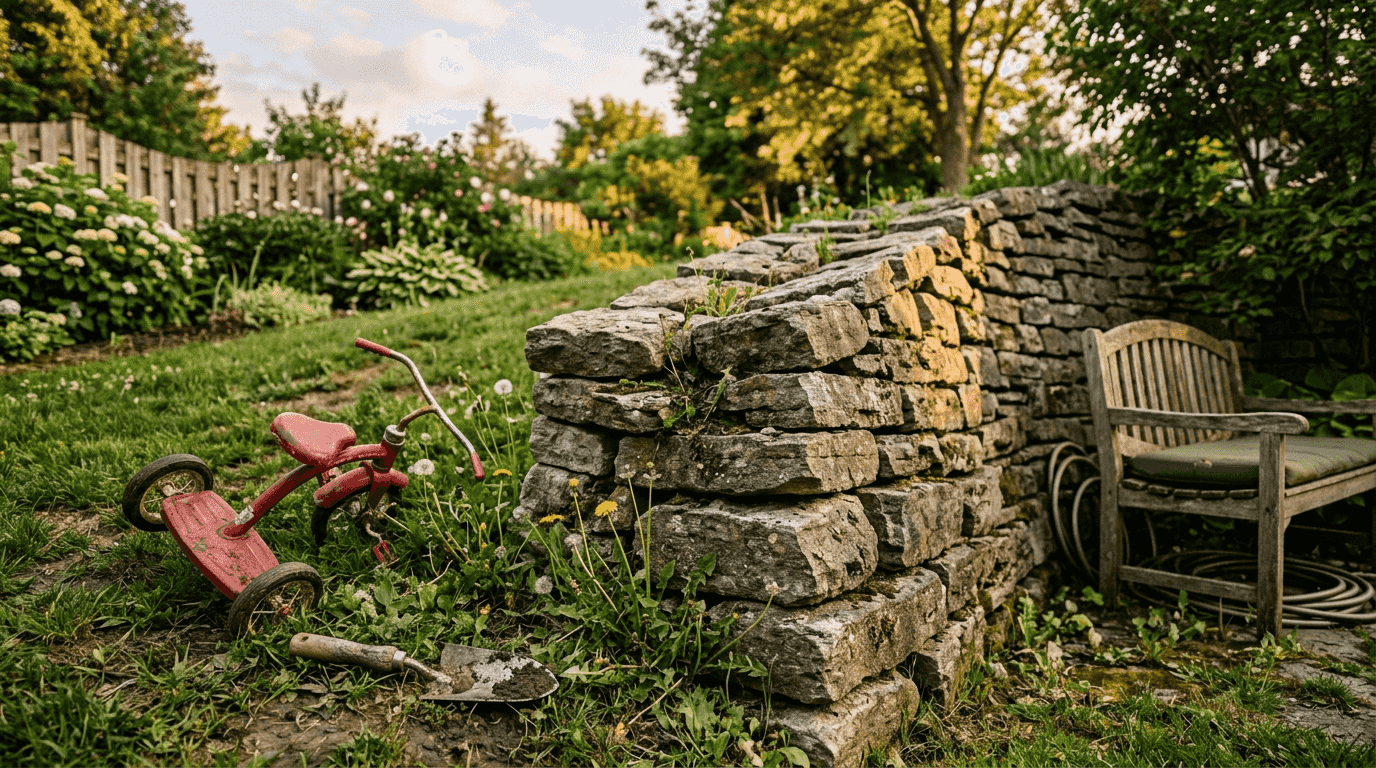
Gravity walls use sheer mass to resist soil pressure. Gravity walls rely on mass and have a broad base for stability, making them ideal for heights under 1 metre. Materials include poured concrete, natural stone, and interlocking blocks. These walls work best on stable soil with moderate slopes. The thick profile means they occupy more horizontal space than other designs.
Cantilever walls employ engineering principles to resist pressure more efficiently. Cantilever walls use leverage with L-shaped footings, creating structural advantage through design rather than mass alone. The vertical stem connects to a wide footing that extends beneath the retained soil. This configuration uses the soil’s own weight to stabilise the wall, allowing taller structures with less material.
Anchored walls incorporate cables or rods driven deep into the soil behind the wall face. These anchors transfer lateral pressure into stable soil zones far from the wall, enabling construction on challenging sites. Engineers specify anchored walls when height exceeds standard limits or when space constraints prevent wider footings. Installation requires specialised equipment and professional contractors.
Gabion walls consist of wire cages filled with rock or rubble. These structures provide excellent drainage naturally, as water flows freely through the stone fill. The rustic aesthetic suits naturalistic landscapes and erosion control applications. Gabion walls flex slightly without cracking, making them resilient in unstable soil conditions.
The four main types are gravity, cantilever, anchored, and gabion walls, each addressing specific engineering challenges. Selection depends on wall height, soil conditions, load requirements, and available budget. Gravity walls suit shorter applications with ample space. Cantilever designs handle taller walls efficiently. Anchored systems tackle extreme heights or poor soil. Gabion walls excel in naturalistic settings with drainage priority.
Pro Tip: For walls between 0.6 m and 1.2 m height, gravity walls using interlocking blocks offer the best balance of cost, durability, and DIY feasibility for homeowners comfortable with basic construction. Explore retaining wall basics to understand fundamental principles.
Comparing retaining wall materials and drainage solutions
Material selection dramatically affects retaining wall performance, maintenance, and appearance. Each option presents distinct advantages and limitations for Toronto-area homeowners.
Wood provides a natural aesthetic that complements traditional landscapes. Pressure-treated timber resists rot for 10 to 20 years, though moisture exposure accelerates deterioration. Wood suits shorter walls under 1 metre and requires regular inspection for signs of decay. Replacement costs can accumulate over decades.
Concrete blocks deliver durability and cost-effectiveness with moderate maintenance needs. Interlocking designs simplify installation and create structural integrity without mortar. These blocks withstand freeze/thaw cycles common in Ontario winters. Lifespan typically exceeds 50 years with proper drainage. Diverse colours and textures match various architectural styles.
Natural stone creates striking visual impact and exceptional durability. Limestone, granite, and fieldstone walls last generations with minimal maintenance. Stone suits both formal and rustic designs. Higher material and labour costs reflect the premium aesthetic and longevity. Skilled masons ensure proper fitting and structural integrity.
Brick offers classic appeal that complements heritage homes and traditional landscapes. Mortar joints require periodic inspection and repointing to prevent water infiltration and freeze damage. Brick walls demand more maintenance than concrete blocks but provide timeless elegance.
Choosing appropriate materials is essential for durability and aesthetics, balancing initial investment with long-term performance. Climate considerations matter significantly in the Greater Toronto Area.
Material | Lifespan | Maintenance | Cost | Best For |
Wood | 10-20 years | High | Low | Short walls, natural look |
Concrete blocks | 50+ years | Low | Moderate | Versatile applications |
Natural stone | 75+ years | Very low | High | Premium aesthetics |
Brick | 50+ years | Moderate | Moderate-High | Traditional homes |
Drainage systems prevent the hydrostatic pressure that causes wall failure. Filter fabric (geotextile) wraps gravel backfill, preventing fine soil particles from clogging drainage paths. Perforated pipes at the wall base collect water and direct it away from the structure. Weep holes in wall faces provide additional escape routes for trapped moisture.
Poor drainage causes 90% of retaining wall failures, making drainage investment non-negotiable. Proper systems reduce pressure by up to 80%, dramatically extending wall life. Components include:
Geotextile fabric preventing soil migration into drainage layers
Clean gravel backfill 30 cm wide minimum behind the wall
Perforated drainage pipe at footing level with minimum 1% slope
Outlet directing water to appropriate discharge points
Weep holes every 1.5 to 2.5 metres along wall face
Pro Tip: Never backfill a retaining wall with clay soil. Use clean gravel or crushed stone that drains freely. This simple material choice prevents hydrostatic pressure buildup that destroys walls prematurely. Learn more through retaining wall maintenance tips and retaining wall best practices.
Which retaining wall design suits your property?
Selecting the ideal retaining wall requires assessing your property’s specific conditions and matching them to appropriate design solutions. Start by evaluating slope steepness and soil characteristics. Gentle slopes with stable soil accommodate gravity walls using interlocking blocks or stone. Steeper grades or poor soil conditions demand cantilever or anchored designs with professional engineering.
Consider load requirements carefully. Walls supporting driveways, patios, or structures carry surcharge loads that multiply lateral pressure. These applications always require engineering calculations, regardless of wall height. Simple garden terracing on stable soil presents far less demanding structural requirements.
Match material selection to your home’s architectural style and your maintenance preferences. Contemporary homes benefit from clean-lined concrete blocks in modern colours. Heritage properties shine with natural stone or brick detailing. Busy homeowners appreciate low-maintenance concrete blocks, while those who enjoy hands-on care might choose wood for its natural warmth.
Drainage strategy must integrate with your overall landscape water management. Retaining walls often intercept natural drainage patterns, requiring careful planning to prevent water accumulation. Professional installers assess existing conditions and design systems that protect both the wall and surrounding property.
Choosing the right wall is vital for safety and cost-effective solutions, not just cosmetic appeal. Poor design leads to failure, property damage, and expensive reconstruction. Follow this decision framework:
Measure wall height at the tallest point and determine engineering requirements.
Test soil drainage by digging a hole and observing water absorption rates.
Identify surcharge loads from driveways, structures, or heavy landscaping above the wall.
Calculate budget including materials, labour, drainage systems, and engineering fees.
Select materials matching aesthetic goals, maintenance capacity, and climate durability.
Engage professional contractors for walls over 1.2 m or complex site conditions.
“Properly designed retaining walls enhance property value, prevent erosion, and create usable outdoor living spaces that families enjoy for generations.”
Retaining walls last over 50 years with proper care, making them excellent long-term investments. Quality construction costs more initially but eliminates the expense and disruption of premature failure and reconstruction. Toronto-area homeowners benefit from working with experienced contractors who understand local soil conditions, building codes, and climate challenges. Explore building retaining walls in Etobicoke for region-specific guidance.
Enhance your outdoor space with expert retaining walls
Now that you understand retaining wall design principles, materials, and drainage essentials, the next step is professional implementation. Interlocking Etobicoke brings over 20 years of experience designing and installing expert retaining walls tailored to Etobicoke, North York, and Toronto properties.
Our team ensures full compliance with local building codes and engineering requirements, eliminating regulatory headaches. We integrate retaining walls seamlessly with interlocking patios, driveways, and walkways to create cohesive outdoor living spaces. Transparent driveway interlocking cost in North York estimates help you plan confidently. From initial consultation through final installation, we deliver premium interlocking installation services that protect your landscape investment and enhance your property’s beauty for decades.
Frequently asked questions
What is the best material for a retaining wall in Etobicoke?
Concrete blocks and natural stone offer excellent durability and weather resistance in Etobicoke’s climate. Both materials withstand freeze/thaw cycles effectively. Wood may require more maintenance due to moisture exposure common in southern Ontario.
How important is drainage for retaining walls?
Drainage is absolutely critical for retaining wall longevity and structural integrity. Without proper drainage, hydrostatic pressure builds behind the wall, causing failure. Proper drainage reduces pressure by up to 80%, preventing costly damage. Systems include filter fabric, perforated pipes, and weep holes working together.
When do I need a professional engineer for my retaining wall?
Walls over 1.2 m require licensed engineer design per municipal building codes in Toronto-area communities. Walls near property lines or carrying surcharge loads from driveways and structures may need engineering regardless of height. Complex soil conditions also warrant professional structural analysis.
How long do retaining walls typically last?
Properly designed and maintained retaining walls last 50 to 75 years depending on materials and conditions. Concrete blocks and natural stone provide the longest service life. Wood walls last 10 to 20 years. Regular drainage maintenance and periodic inspections extend lifespan significantly.
Can I build a retaining wall myself?
Homeowners with construction experience can build gravity walls under 1 metre using interlocking blocks on stable soil. Taller walls, cantilever designs, or challenging site conditions require professional contractors. Engineering, proper drainage installation, and code compliance demand expertise that prevents costly mistakes.
Recommended
Comments