
Retaining wall basics for your Toronto outdoor space
- pkgbp02
- 1 day ago
- 10 min read
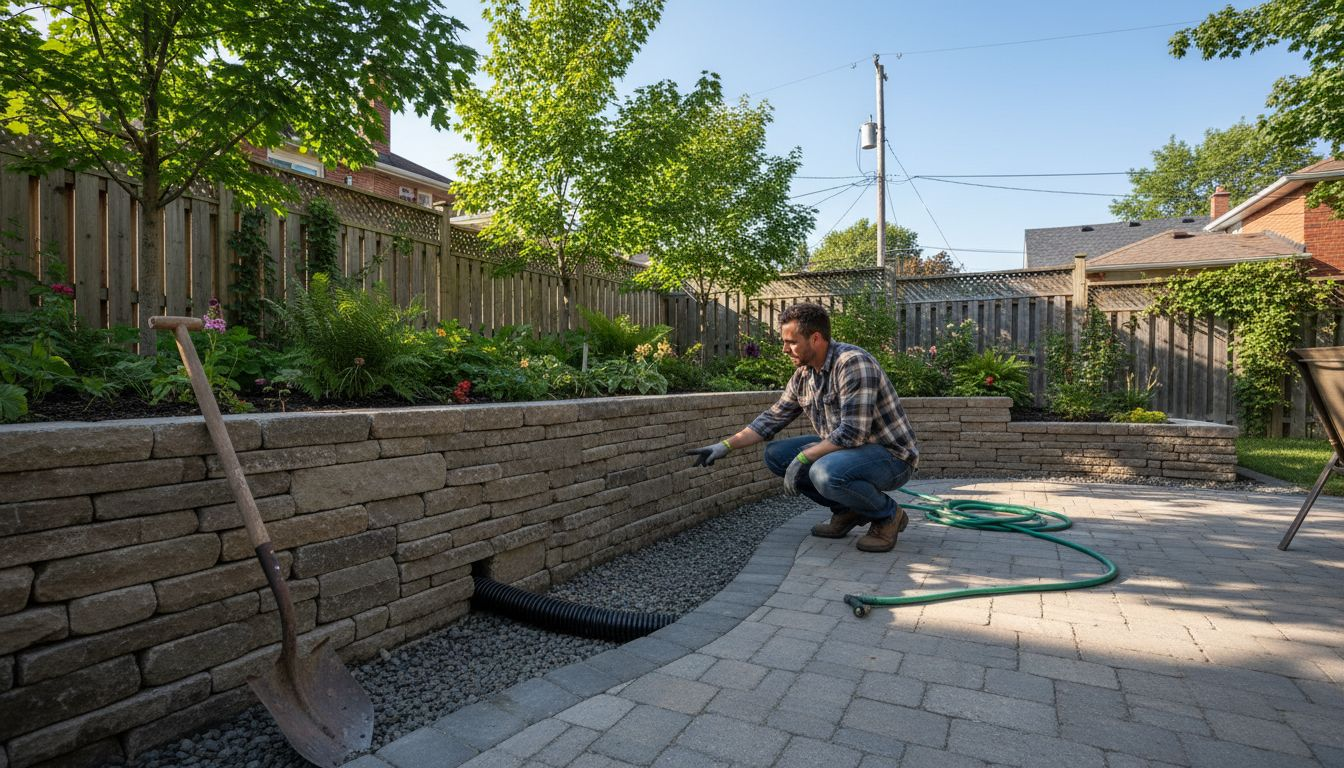
Many homeowners assume retaining walls are purely decorative features, but these structures actually bear immense pressure from thousands of pounds of soil pushing outward every day. Without proper engineering and drainage, even a beautiful wall can tilt, crack, or collapse within a few years. This guide walks you through the essential types, design principles, and maintenance strategies you need to keep your retaining wall standing strong in Etobicoke, North York, and Toronto for decades to come.
Table of Contents
Key takeaways
Point | Details |
Wall types | Gravity, cantilever, MSE, and anchored walls suit different heights and site conditions. |
Drainage is critical | Poor drainage causes 90% of retaining wall failures due to hydrostatic pressure buildup. |
Engineering requirements | Walls exceeding 1.2 metres typically need licensed engineer design for compliance and safety. |
Maintenance extends lifespan | Regular inspections and upkeep can push wall longevity beyond 50 years. |
Failure warning signs | Watch for cracks, tilting, and drainage blockages indicating structural distress. |
Understanding different types of retaining walls
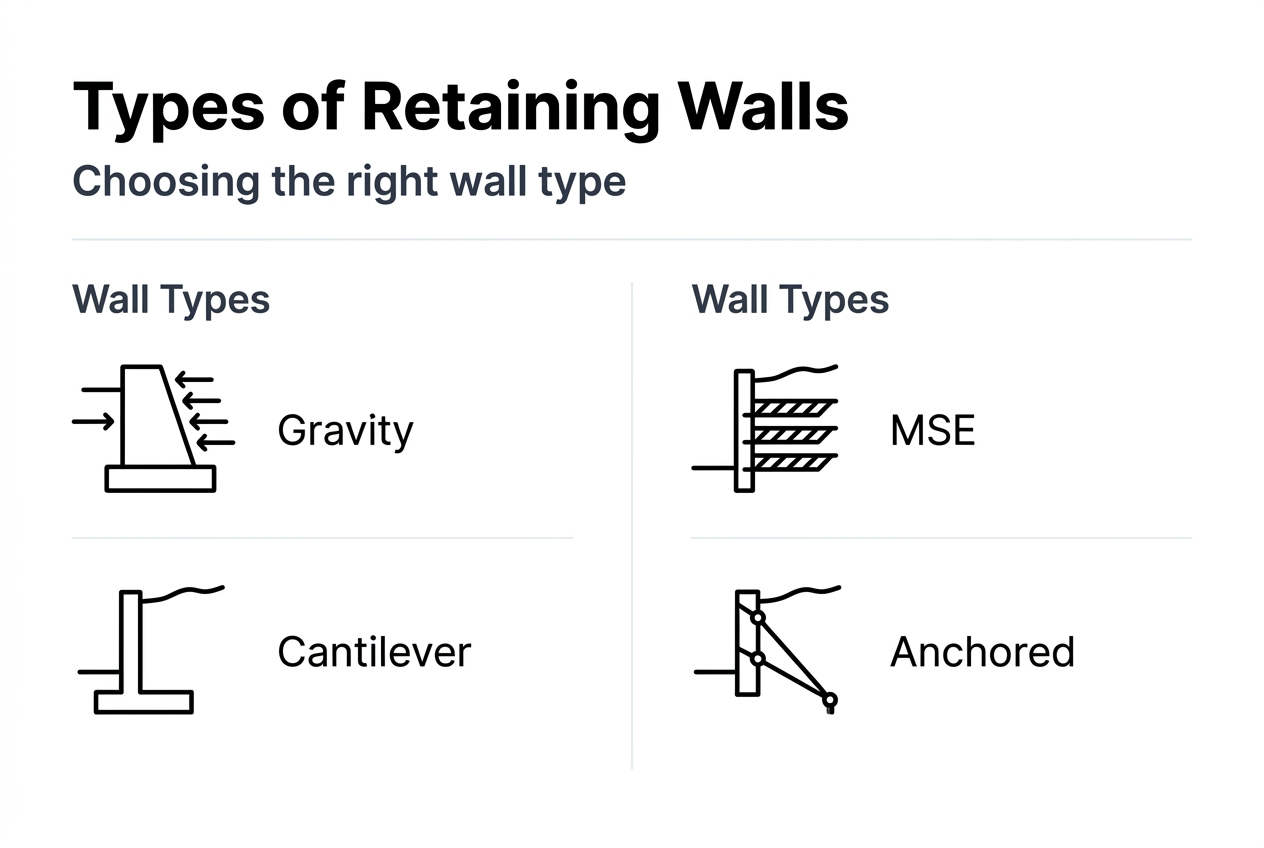
Gravity walls rely entirely on their sheer mass to resist the lateral pressure from soil behind them. These walls work by using heavy materials like stone, concrete, or masonry to stay put through weight alone. They’re ideal for residential projects where you have enough space for a broad base, typically handling heights up to about four metres comfortably.
Cantilever walls take a smarter engineering approach by using a reinforced concrete stem and footing that leverages the soil’s own weight for stability. The L-shaped design uses the backfill soil sitting on the heel of the footing to counterbalance lateral forces. This makes cantilever walls perfect when you’re working with limited space and need to go taller without a massive footprint.
Mechanically stabilised earth (MSE) walls incorporate soil reinforcement layers like geogrid or metal strips that tie the wall facing back into the retained soil mass. This creates a composite structure that can reach impressive heights while maintaining flexibility for settling. MSE systems shine in large-scale projects or where ground conditions make traditional walls impractical.
Anchored walls use tensioned cables or rods driven deep into stable soil or rock behind the wall face. These tiebacks pull the wall backward, counteracting the outward pressure from retained earth. Anchored systems handle very tall walls or challenging terrain where other methods fall short, though they require more complex installation.
Choosing the right wall type depends on your specific height requirements, available space, and soil conditions. Gravity walls suit smaller heights up to 4m, cantilever walls handle moderate heights from 3 to 8m, MSE walls can reach 2 to 12m or more, and anchored walls tackle 5 to 20m plus heights. Your site’s unique characteristics and local building codes will guide which solution makes the most sense for your types of retaining walls every homeowner should know project.
Key design principles and structural stability
Retaining walls must resist three fundamental failure modes that threaten every structure holding back earth. Bearing failure occurs when the soil beneath the wall’s base can’t support the weight, causing the foundation to sink. Sliding happens when lateral earth pressure pushes the wall forward along its base. Overturning arises when the turning moment from earth pressure tips the wall forward around its toe.
Lateral earth pressure and hydrostatic water pressure are the primary forces your wall faces constantly. The retained soil exerts pressure that increases with depth, reaching significant magnitudes even at moderate heights. A 6-foot wall experiences about 1,300 lbs per linear foot of pressure at its base, creating substantial overturning and sliding forces the structure must resist.
For gravity walls, engineers typically design base width about 50 to 60% of the wall height to ensure the centre of gravity stays safely within the base. This proportion shifts enough mass over the foundation to prevent tipping while maintaining adequate bearing pressure distribution. Cantilever walls can achieve similar stability with narrower bases by using reinforced concrete to create internal moment resistance.
Moist soil creates pressures up to three times higher than dry soil due to water’s weight and reduced friction between particles. This dramatic increase makes drainage absolutely vital for keeping design loads within safe limits. Saturated backfill not only pushes harder but also reduces the soil’s shear strength, making sliding failure more likely.
Designing for structural stability:
Calculate active earth pressure based on soil type, moisture content, and wall height.
Size the base width and thickness to resist overturning with adequate safety factors.
Check bearing capacity of foundation soil against imposed loads and adjust footing as needed.
Design reinforcement in concrete elements to handle bending moments and shear forces.
Verify sliding resistance using friction between base and soil plus any passive pressure.
Add counterfort ribs on tall walls to reduce bending stresses in the wall stem.
Pro Tip: Incorporate counterfort ribs every 3 to 4 metres on walls over 6 metres tall to dramatically reduce concrete thickness requirements while maintaining strength. These vertical fins tie the wall face back to the heel slab, creating a more efficient structural system that saves material costs.
Understanding these retaining wall structural principles helps you recognise why proper engineering matters. The forces involved are substantial, and small design errors can lead to expensive failures down the road.
Why proper drainage matters and how to ensure it
Water accumulating behind retaining walls increases pressure exponentially, often transforming a stable structure into a disaster waiting to happen. Hydrostatic pressure from saturated soil can exceed design loads by several times, overwhelming even well-built walls. Inadequate drainage systems cause over 60% of retaining wall failures due to this pressure buildup, making drainage your wall’s most critical protection.
A properly designed three-layer drainage system keeps water away from the wall back. Weep holes at the base allow water to escape through the wall face at regular intervals. Drainage aggregate, typically 19mm clear stone, creates a permeable layer directly behind the wall that channels water downward. A perforated drain pipe at the footing level collects and diverts water away before it can build up pressure.
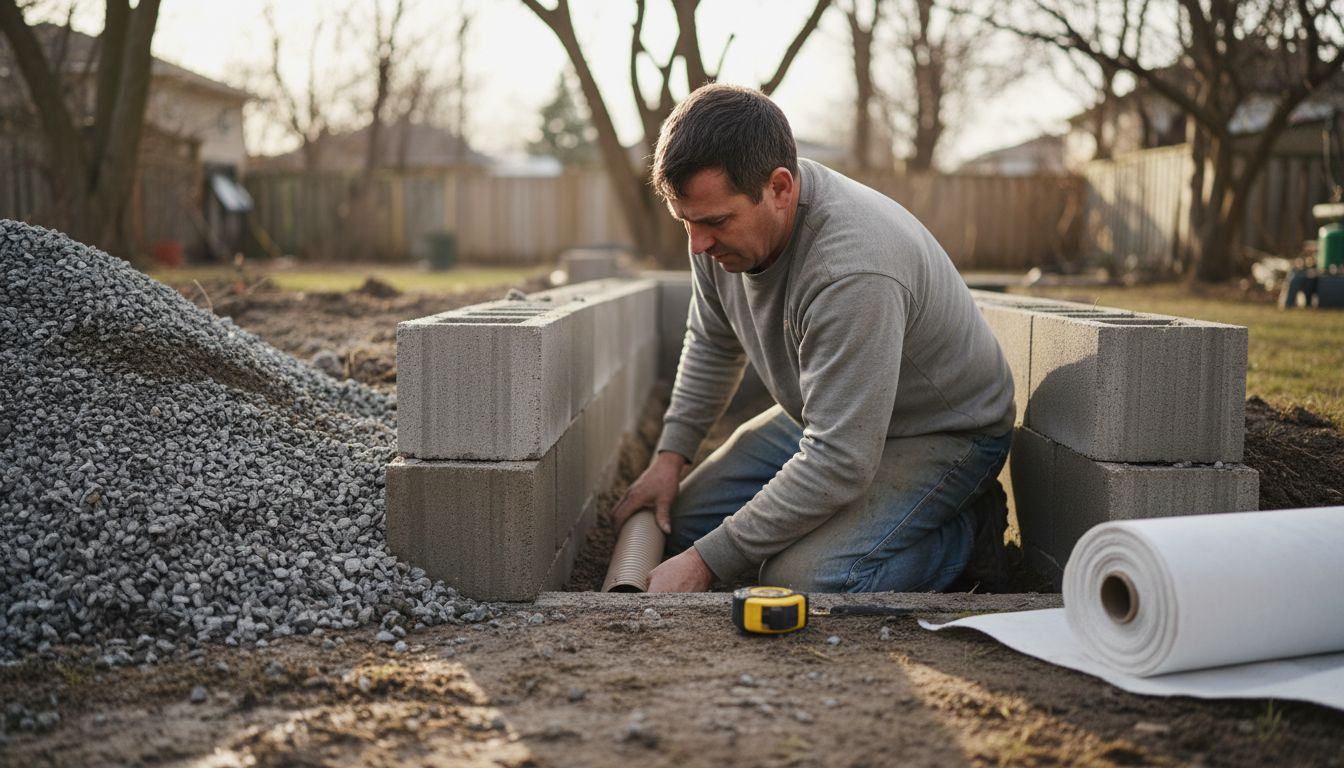
Without geotextile filter fabric separating the drainage stone from retained soil, fine particles migrate into the gravel over time. This soil infiltration gradually clogs the drainage layer, reducing its permeability until it becomes nearly useless. The fabric acts as a one-way valve, letting water through while blocking soil movement, preserving drainage effectiveness for decades.
Essential drainage practices:
Install perforated drain pipes with minimum 2% slope to ensure gravity flow away from the wall.
Space weep holes every 1.2 to 1.8 metres horizontally along the wall base to provide adequate drainage points.
Use clean, angular drainage stone rather than rounded river rock for better water flow characteristics.
Extend drain pipes to daylight or connect to storm sewers rather than letting them terminate in soil.
Backfill with free-draining granular material rather than clayey soils that retain moisture.
Install capillary breaks between different soil layers to prevent upward water migration.
Pro Tip: Schedule drainage inspections during spring thaw and after heavy autumn rains when water flow peaks. These seasonal checks catch blockages early, before hydrostatic pressure has time to damage your wall structure permanently.
90% of retaining wall failures are caused by poor drainage design, not poor construction.
This sobering statistic from retaining wall experts highlights how even perfectly built walls fail when drainage gets neglected. Proper drainage design yard beauty planning from day one prevents the vast majority of problems homeowners face with retaining structures. Investing in quality drainage systems costs far less than repairing or replacing a failed wall.
Maintaining clear drainage paths year-round protects your investment and keeps your outdoor space safe. Remove leaves and debris from weep holes each autumn and verify that drain pipe outlets remain open and flowing freely. These simple maintenance tasks take minutes but prevent thousands of dollars in potential damage.
Retaining wall maintenance and signs of trouble
Regular inspections catch small problems before they escalate into structural failures requiring expensive repairs or complete rebuilds. Walk your wall twice yearly, looking carefully at the face, joints, and surrounding areas for changes. Spring and autumn inspections work best, as freeze-thaw cycles and heavy rains reveal weaknesses that might stay hidden during milder weather.
Common signs of failure include horizontal, vertical, and stair-step cracks in the wall face, along with walls tilting out of plumb even slightly. Horizontal cracks near the base suggest bearing failure or inadequate reinforcement. Vertical cracks often indicate differential settlement where the wall sits on varying soil conditions. Stair-step cracks in masonry walls follow mortar joints and signal structural movement.
Walls leaning forward, even by just a few degrees, indicate serious structural distress from excessive earth pressure or foundation problems. Use a level or plumb bob to check vertical alignment annually. Any measurable lean warrants immediate professional assessment, as tilting walls can accelerate toward failure suddenly once they pass a tipping point.
Maintenance extends your wall’s service life dramatically when performed consistently. Properly maintained retaining walls can last over 50 years, far exceeding their initial design life through attentive care. Simple upkeep tasks prevent minor issues from becoming major structural concerns.
Key maintenance tasks:
Inspect drainage features after every heavy rainfall to ensure water flows freely through weep holes and pipes.
Clean debris from weep holes and drainage outlets at least twice yearly to maintain system effectiveness.
Verify no new loads or structures have been added above the wall that exceed original design assumptions.
Re-compact any settled backfill material promptly to maintain proper soil support behind the wall.
Seal minor surface cracks in concrete walls to prevent water infiltration and freeze-thaw damage.
Trim vegetation growing on or near the wall that could damage mortar joints or block drainage.
Monitor erosion at the wall toe and repair any undermining before it compromises foundation stability.
Consult a licensed engineer immediately for walls over 1.2 metres showing any distress signs, or for shorter walls near property lines, buildings, or supporting heavy loads like driveways. Professional assessment determines whether repairs can stabilise the structure or complete replacement becomes necessary. Early intervention almost always costs less than waiting until failure occurs.
Your retaining wall maintenance guide 2026 approach should balance regular inspections with prompt repairs. Document your wall’s condition with photos each season to track changes over time. This visual record helps you spot gradual deterioration that might otherwise go unnoticed until problems become severe.
Expert retaining wall services in Etobicoke and Toronto
After understanding what makes retaining walls succeed or fail, you might realise professional guidance ensures your investment performs safely for decades. Expert retaining walls from experienced installers combine engineering knowledge with construction craftsmanship to deliver structures that handle your site’s unique challenges.

Professional assessment evaluates your property’s soil conditions, drainage patterns, and local building code requirements before design begins. This thorough planning prevents costly mistakes and ensures your wall meets all safety and legal standards from day one. Custom installations blend structural durability with aesthetic appeal, creating outdoor features that enhance your property value while serving their functional purpose.
Maintenance services from qualified professionals extend your wall’s lifespan and catch developing problems early, when repairs remain straightforward and affordable. Regular professional inspections complement your own seasonal checks, providing expert eyes that recognise subtle warning signs homeowners might miss. This proactive approach prevents emergency situations and protects your landscape investment.
Professional retaining wall services include:
Site evaluation and soil testing to determine optimal wall type and design requirements.
Engineered designs that meet local codes and handle your property’s specific conditions.
Custom drainage solutions integrated into the wall system for long-term performance.
Quality construction using premium materials and proven installation techniques.
Ongoing maintenance programmes that preserve structural integrity and appearance.
Repair services for existing walls showing signs of distress or deterioration.
Interlocking Etobicoke brings over 20 years of experience transforming outdoor spaces throughout Etobicoke, North York, and Toronto. Our team understands local soil conditions, weather patterns, and building requirements that affect retaining wall performance. We design and install walls that stand strong while complementing your landscape vision, from natural stone aesthetics to modern segmental block systems.
Whether you need a new retaining wall for landscaping terraces, erosion control, or creating usable yard space, professional installation protects your investment. Our approach combines structural engineering with creative design, delivering walls that perform their job reliably while enhancing your outdoor living areas. Explore our driveway interlocking cost in North York and other premium interlocking installation services to discover how we can transform your property.
Frequently asked questions
How long do retaining walls last?
Retaining walls are designed to last 50 years or more with proper drainage systems and regular maintenance. Walls with excellent drainage and attentive upkeep often exceed 75 years of service life. Neglected walls or those with poor drainage may fail within 10 to 15 years regardless of construction quality.
Do all retaining walls need an engineer?
Walls over 1.2 metres generally require a licensed engineer’s design according to building codes in Ontario. Shorter walls may also need engineering if they support additional loads like driveways, sit near property lines, or have challenging soil conditions. Check with your local building department for specific requirements in your municipality.
What are common signs of retaining wall failure?
Common signs include cracks in horizontal, vertical, and stair-step patterns, along with walls tilting out of plumb. Other warning signs include bulging wall sections, separation from adjacent structures, soil erosion at the toe, and water pooling behind the wall. Any of these symptoms warrant immediate professional inspection to assess structural integrity.
How can I improve drainage behind my retaining wall?
Use weep holes, drainage aggregate, perforated drain pipes, and geotextile fabric to ensure effective drainage. Install weep holes every 1.2 to 1.8 metres along the base and slope drain pipes at least 2% away from the wall. Clean weep holes seasonally and verify drain outlets remain open and flowing freely after heavy rains.
Can I build a retaining wall myself?
Homeowners can build short walls under 0.6 metres using modular block systems designed for DIY installation. Taller walls require engineering knowledge, proper equipment, and understanding of soil mechanics and drainage principles. Mistakes in design or construction compromise safety and often cost more to repair than professional installation would have cost initially.
Recommended